
Tequila from the point of view of legislation: what does "100% agave" really mean and why it cannot be produced outside Mexico
Tequila is one of the most strictly regulated spirits in the world. Unlike many other categories of alcohol, it is not just a technological process, but a legally protected product with precisely defined origins, production rules and control mechanisms. For traders, distributors and investors alike, understanding this legislation is key.
1. Tequila as a protected designation of origin (DO/GI)
Tequila is a denominación de origen (DO) - that is, a protected designation of origin, like Cognac or Scotch whisky.
- It can only be produced in Mexico, specifically in the state of Jalisco and selected regions of the states of Nayarit, Tamaulipas, Michoacán and Guanajuato.
- In the EU, 'Tequila' is officially recognised as a geographical indication (GI) and its use is legally protected.
- This means that no producer outside Mexico can legally use the designation tequila, regardless of the production technology.
👉 Practical impact:
If someone distills agave spirit outside of Mexico, it is always "agave spirit", not tequila.
2. NOM (Norma Oficial Mexicana)
The whole sector is governed by the norm:
NOM-006-SCFI (current version 2012)
This standard:
- Defines what tequila is,
- sets out the production processes,
- regulates labelling, export, bottling,
- controls the entire chain "from field to bottle".
Compliance with the standard controls:
CRT - Consejo Regulador del Tequila
- certifies producers,
- controls production and exports,
- issues export certificates for each batch.
Without CRT certification, tequila cannot be exported or legally sold.
3. NOM number - the identity of each tequila
On every bottle you will find the NOM number:
- This is the identifier of the distillery that produced the tequila,
- assigned by the Mexican government (via the CRT),
- allows you to trace the origin of the product.
Important:
- Multiple brands can have the same NOM (one distillery produces for multiple brands),
- NOM does not guarantee quality, only authenticity.
4. Agave vs. 100% agave vs. Blue Weber agave
This is a crucial point that is often misinterpreted. One of the biggest marketing confusions is the difference between the categories.
👉 Tequila is only ever made from one type of agave:
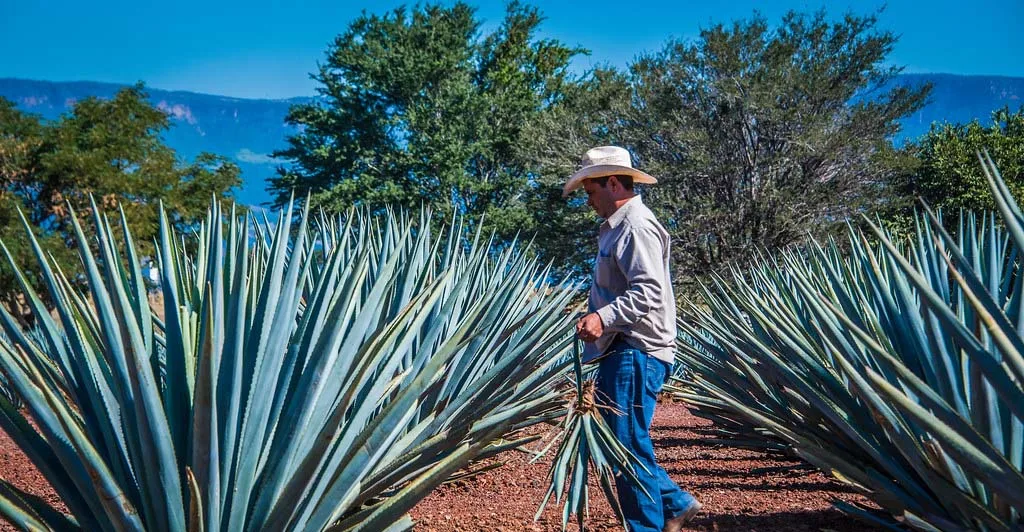
Agave tequilana Weber azul (Blue Weber agave)
➡️ There is no tequila made from any other type of agave.
a) "Tequila" (mixto)
- 51 % minimum of agave sugars,
- up to 49 % may be from other sources (sugar, molasses, corn).
(b) '100% agave tequila'
- 100% of the sugars come from Blue Weber agave,
- with no added external sugars.
5. IBC, bulk and bottling
This is a critical part for the trade:
100% agave tequila
- must be bottled exclusively in Mexico,
- exported only as the final product in the bottle.
Mixto tequila
- can be exported in bulk (e.g. IBC tanks),
- it can then be bottled outside Mexico.
👉 Practical impact:
- Private label projects outside Mexico are only realistic for mixto,
- for the premium segment (100% agave) the whole bottling chain must be in Mexico.
6. Classes of tequila according to legislation
The NOM also defines categories according to ageing:
- Blanco (unaged)
- Reposado (min. 2 months in barrel)
- Añejo (min. 1 year)
- Extra Añejo (min. 3 years)
- Joven / Oro (blend)
7. Export and import to the EU
a) Legislative framework
- EU recognises tequila as a GI → must comply with Mexican rules
- imports are subject to a CRT export certificate
b) Customs and trade
- tequila is covered by the EU-Mexico trade agreement
- in practice, the duty on tequila is 0% (preferential treatment if rules of origin are met)
👉 difference to rum:
- for tequila there is no "quota system as for some rums",
- it is fully liberalised trade under the agreement.
c) EU requirements
- min. 35% ABV
- permitted bottle volumes (700 ml standard, etc.)
- labelling must comply with EU spirits regulation
8. Labelling and compliance
Each tequila must contain:
- NOM number
- country of origin (Mexico)
- category (100% agave/tequila)
- grade (blanco, reposado...)
- details of the producer/bottler
Exports to the EU additionally require:
- the language of the label,
- health warnings,
- compliance with EU spirits regulation.
9. Market control and authenticity
CRT shall ensure:
- tracking of each batch,
- export control,
- anti-counterfeiting protection.
Without this certification it is not possible to:
- to place the product on the market,
- pass customs clearance.
Conclusion: tequila as a regulated "asset class"
From a business perspective, tequila is unique:
- It is a fully regulated product with a geographic monopoly,
- it has a well-defined supply chain,
- has high brand protection in global markets,
- while allowing for different business models (mixto vs. 100% agave).
👉 For the investment or premium segment:
- Almost exclusively 100% agave tequilas are relevant,
- which have higher value, controlled origin and lower risk of manipulation.
Want to discuss your situation?
Our team offers bespoke excise, compliance, and logistics consultations for spirits businesses across Central Europe.
Insights
More from Insights
ProWein Düsseldorf 2026: where the global world of wine and spirits meets
One of the places where the global community of wine and spirits professionals meet every year - a space for new partnerships, business opportunities and conversations that move the whole sector forward.
B2B distribution readiness: a 6-point check before entering Central Europe
Many spirits enter Central Europe with a strong product but incomplete commercial preparation. A six-point readiness check to carry out before your first conversation with a distributor.
Bonded Warehouse Operations for Spirits: A Practical Guide
How bonded warehouses work for spirits importers, the documents required, and why Hyveco in Brno is the preferred partner for CZ/SK operations.